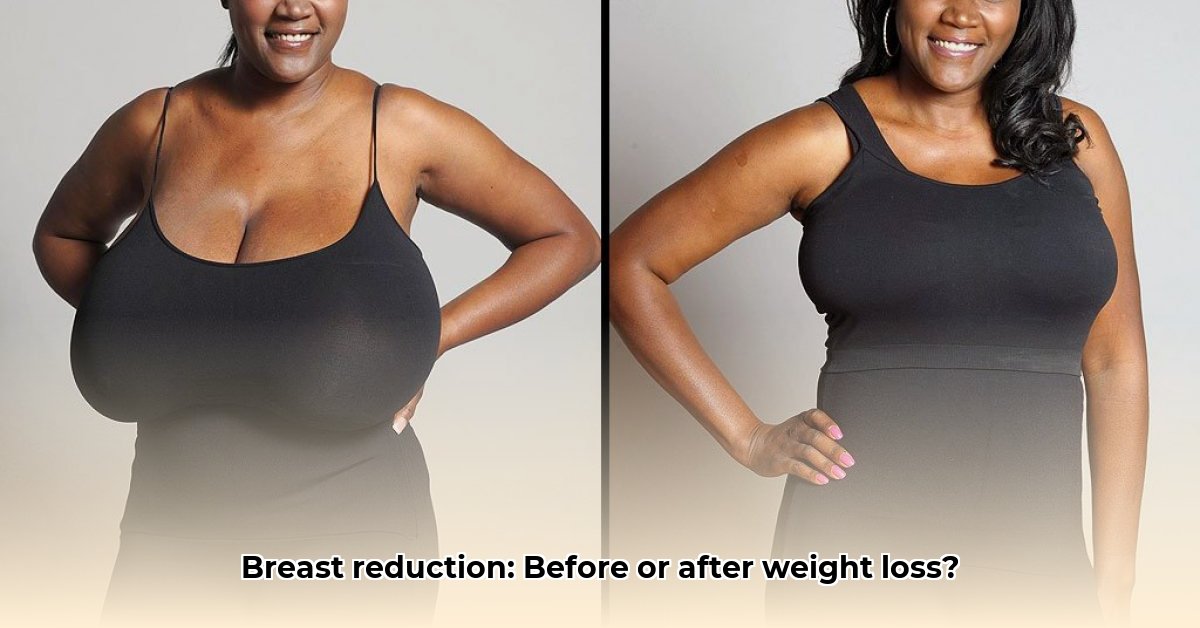
Should you undergo breast reduction surgery before or after weight loss? This is a crucial question with no single right answer, depending entirely on your individual circumstances. This comprehensive guide will help you navigate this complex decision, providing a clear understanding of the factors involved and actionable steps towards making the best choice for you.
Understanding the Impact of Weight Fluctuation
Significant weight changes directly impact breast size and shape. Weight loss after surgery can lead to excess skin and sagging, while weight gain can diminish the results. Therefore, considering your weight trajectory is paramount in determining the optimal timing for breast reduction. This isn't solely about the numbers on the scale; rather, it's about achieving stable weight and body composition before surgery.
Breast Reduction Before Weight Loss: Advantages and Disadvantages
Advantages:
- Immediate Gratification: Experience immediate relief from back and shoulder pain, and an immediate boost in confidence.
- Proportional Results: The surgery is tailored to your current weight and breast size, resulting in a more precise (initial) outcome.
Disadvantages:
- Potential for Excess Skin: Substantial weight loss following surgery significantly increases the risk of excess skin and sagging, potentially necessitating further procedures.
- Increased Surgical Risks: A higher BMI elevates the risks associated with any surgery, including breast reduction.
- Results May Not Align with Long-Term Goals: If significant weight loss is planned, the initial surgical results may not align with your final body image goals.
Breast Reduction After Weight Loss: A Balanced Perspective
Advantages:
- Improved Long-Term Results: Waiting allows for a more accurate assessment of your final breast size and shape, leading to better surgical planning and more aesthetically pleasing, lasting results.
- Reduced Risk of Excess Skin: Achieving your weight loss goals beforehand minimizes the risk of excess skin post-surgery, potentially simplifying the procedure.
Disadvantages:
- Delayed Gratification: This approach requires patience, as you'll have to wait to experience the benefits of breast reduction.
- Commitment to Weight Loss Plan: Success requires dedication to a sustainable weight-loss program, adding another layer of commitment to the overall process.
- Possibility of Residual Excess Skin: Even with weight loss, some excess skin might remain, depending on factors like the total amount of weight lost and skin elasticity.
Key Factors Influencing Your Decision
Several crucial factors must be considered when determining the best timing for your breast reduction:
- Projected Weight Loss: The magnitude of planned weight loss significantly impacts the decision. A small weight adjustment might have minimal impact, but major weight loss requires careful planning.
- Body Mass Index (BMI): A higher BMI generally increases surgical risks. Your surgeon will assess your BMI and its implications.
- Weight Loss Strategy: The method employed for weight loss (e.g., diet and exercise, bariatric surgery) is relevant, as it informs the surgeon's assessment of your weight stability and timeline.
- Degree of Ptosis (Breast Sagging): The severity of breast sagging influences the surgical approach, impacting the timing decision.
Dr. Evelyn Reed, a board-certified plastic surgeon at the University of California, Los Angeles, emphasizes, "Open communication with your surgeon is paramount. They will consider your individual circumstances, providing personalized recommendations based on a thorough assessment of your health profile and goals."
A Step-by-Step Guide to Making the Right Decision
- Honest Self-Assessment: Realistically assess your weight-loss goals and commitment to achieving them.
- Consult a Board-Certified Plastic Surgeon: Seek a consultation with an experienced and reputable plastic surgeon specializing in breast reduction.
- Comprehensive Evaluation: Undergo a thorough evaluation, including a physical exam, BMI assessment, and detailed discussion of your expectations.
- Collaborative Decision-Making: Work closely with your surgeon to determine the optimal timing for your breast reduction procedure.
- Realistic Expectations: Understand that all surgeries have limitations, and unexpected outcomes are possible. Manage your expectations appropriately.
- Adherence to Post-Operative Instructions: Strictly follow your surgeon's post-operative instructions to ensure proper healing and optimal results.
Maintaining a Healthy Lifestyle: The Long-Term Perspective
Maintaining a healthy lifestyle after surgery is vital for long-term success and preservation of results. This includes maintaining a stable weight through a balanced diet and regular exercise. Remember, this is a journey, not a single event. Your commitment to a healthy lifestyle will significantly impact the longevity of your breast reduction results.
Risk Assessment: A Comparative Overview
| Risk Factor | Breast Reduction Before Weight Loss | Breast Reduction After Weight Loss |
|---|---|---|
| Excess Skin/Sagging | High | Lower |
| Surgical Complications | Potentially higher with higher BMI | Potentially lower with lower BMI |
| Cost | Might be higher initially (potential need for future procedures) | Potentially lower overall (one procedure may suffice) |
| Psychological Impact | Immediate improvement in confidence but potential for future adjustment | Potential for greater long-term satisfaction |
The decision regarding the timing of your breast reduction is profoundly personal. By carefully considering the factors presented here and maintaining open communication with your surgeon, you can confidently make the choice that aligns perfectly with your individual needs and goals. Remember, your well-being and satisfaction are the ultimate priorities.